Smart Ways to Promote Your Business Online
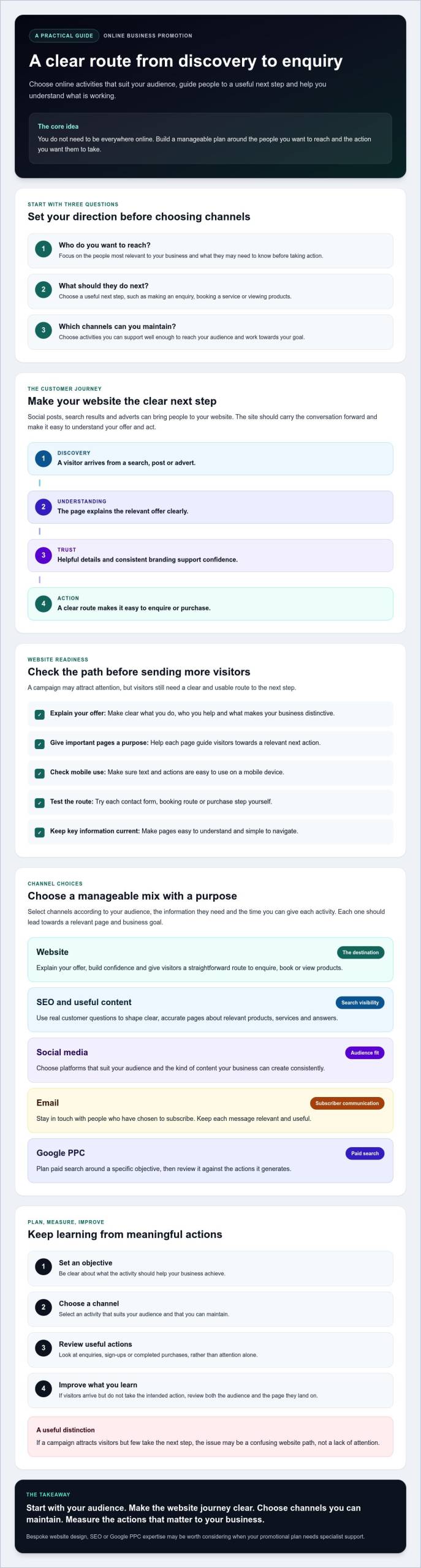
If you’re searching for “Things You should be Doing Online to promote you business”, start by focusing on the people you want to reach and the action you want them to take. You don’t need to be everywhere online. You need a clear route from discovery to enquiry or purchase.
Social platforms, search visibility and paid advertising can all help, but only when they suit your audience and lead towards a useful next step. Your website is often where those channels meet. It should explain what you offer, build confidence and make it easy for visitors to act on any device.
This article offers a practical way to choose online promotion activities without trying to do everything at once. You’ll learn how to check your website, compare channels and measure progress against business goals. The key is to start with a manageable plan and improve it as you learn what works for your audience.
Things You should be Doing Online to promote you business
Begin with three questions: Who do you want to reach? What should those people do next? Which channels can you maintain well enough to reach them? The answers can help you prioritise website improvements, SEO, social media, email or Google PPC without spreading your time across activities that don’t support your goals.
Key Takeaways
- Make your website the clear next step after discovery, with useful information and a straightforward route to enquire or buy.
- Choose channels that suit your audience and business goal instead of trying to maintain a presence everywhere.
- Use the question “Things You should be Doing Online to promote you business” as a prompt to assess which activities are relevant to your business.
- Set an objective, choose a channel and review meaningful actions such as enquiries, sign-ups or completed purchases.
- Consider bespoke website design, SEO or Google PPC expertise when your promotional plan needs specialist support.
Why online promotion starts with a website built to turn attention into action
Online promotion is the coordinated use of digital channels to help relevant people discover a business, understand what it offers and take a next step.
Coordination matters. A social post, search result or advert can bring someone to your website, but the site needs to carry the conversation forward. If visitors can’t quickly work out what you do, who you help or how to get in touch, their interest may not lead to an enquiry or sale.
Digital marketing covers a range of channels, but the important question is how they work together. Map the route you want visitors to take: discover your business, find relevant information, understand why your offer suits them, then enquire, book or view products. Clear page content, relevant examples and visible contact details make that journey easier to follow.
Before investing more time or budget in promotion, check whether your website is ready to receive visitors. A purposeful design gives people a clear next step, rather than expecting each channel to do all the work.
What should a business website do for online promotion?
Your website should explain what you offer, who it helps and what makes your business distinctive. Give each important page a clear purpose, then make the next action easy to spot. That might be sending an enquiry, booking a service or viewing products in an online shop. For practical guidance on planning a site, explore this website design guide for Irish businesses.
Is your website ready to receive visitors from marketing channels?
Before directing people to your site, review the essentials. Check that key pages are current, easy to understand and simple to navigate. Open them on a mobile device and check that text and actions are easy to use. Then test each contact form, booking route or purchase step yourself. Fixing a broken or confusing path first helps visitors act on the interest your promotion creates.
- Discovery: The visitor arrives from a search, post or advert.
- Understanding: The page quickly explains the relevant offer.
- Trust: Helpful details and consistent branding support confidence.
- Action: A clear route makes it easy to enquire or purchase.
Once this journey works, you can assess your promotional channels more fairly. If a campaign attracts visitors but few take the intended action, review both the audience and the page they land on. The issue may not be a lack of attention. The website may simply need to make the next step clearer.
Which online channels help customers discover and trust your business?
You don’t need to appear on every platform. A manageable mix that suits your audience is more useful than an ambitious plan you can’t maintain. Choose channels based on how people discover businesses like yours, what information they need before acting and the time you can give each activity.
Some channels build visibility over time, while others can be tested as focused campaigns. SEO, useful website content and regular communication with subscribers require ongoing attention. Paid search, such as Google PPC, can be planned around a specific objective and reviewed against the actions it generates. A digital marketing plan works best when each activity has a purpose and a route to a relevant page.
How can search and useful content attract relevant visitors?
SEO helps relevant pages become easier to find when people search for products, services or answers related to your business. Start with real customer questions, then create clear, accurate pages that answer them directly. A service page might explain what’s included and who the service suits. A helpful article could answer a common question before someone enquires. Make each page useful and specific rather than publishing simply to fill a schedule.
When do email, social media and paid search make sense?
Email can help you stay in touch with people who have chosen to subscribe, provided each message remains relevant and useful. Choose social platforms according to your audience’s habits and the kind of content your business can create consistently, not because a platform is trending. Google PPC offers a paid route to search visibility. Set a clear goal, such as generating relevant enquiries, and track the actions that follow.
These channels do different jobs. Social content can help people become familiar with your business; email can maintain communication with subscribers; and paid search can put an offer in front of people actively searching. None guarantees a result. Match each channel to a purpose and assess whether the attention it attracts is relevant.
Before committing to a channel, write down the audience, goal and effort required. For example, a business with limited time to create content may be better served by improving a few important website pages than by trying to post frequently across several platforms. Start with a manageable mix, then adjust it as you learn which activities support your goals.
For specialist support with website design, SEO or Google PPC, explore Insight Multimedia’s digital services.
How to choose the right online promotion mix for your business
Channel choice should follow audience behaviour, your business goal and the capacity you have to maintain each activity. The right mix for a service business seeking enquiries may not suit a retailer building repeat interest or an e-commerce business aiming to increase product sales. Compare options against your own priorities rather than copying another business’s marketing plan.
Use this table as a starting point. Effort and cost categories are relative, not quoted prices, and can vary with your goals, resources and approach.
| Channel | Audience fit | Business goal | Effort | Cost category | How to measure |
|---|---|---|---|---|---|
| Search content and SEO | People researching a need, service or solution | Build visibility and attract relevant visitors | Steady work to create and improve useful pages | Ongoing resource investment | Relevant visits, enquiries or purchases |
| People who have chosen to subscribe | Maintain useful communication and encourage repeat action | Regular planning, writing and sending | Depends on tools and time involved | Clicks, enquiries, sign-ups or purchases | |
| Paid search | People searching for a clearly defined offer | Promote a specific service, product or campaign | Campaign setup, monitoring and refinement | Paid activity with budget to manage | Landing page actions and results against campaign goals |
| Social platforms | People who use platforms suited to your audience and content | Build awareness, familiarity or site visits | Consistent content creation and interaction | Time investment, with possible paid activity | Relevant engagement, visits and resulting enquiries |
Which channel fits your audience and business goal?
Match the channel to what people are doing. Search content can answer questions from customers actively researching a need. Email suits ongoing communication with an opted-in audience. Paid search is worth considering for a defined campaign, provided the landing page gives visitors a clear action and you can track it. A service business might prioritise enquiries, while a retailer may focus on product interest and an e-commerce business on completed purchases.
How can you prioritise without spreading your team too thin?
Begin with a small selection you can sustain. Before committing, decide who will create, publish, monitor and improve each activity. If a channel has no clear owner or realistic time allocation, simplify the plan. Write down your objective, audience, chosen channels, available resources and review date. This turns a broad marketing ambition into practical decisions your team can manage and assess.
Compare each option with your audience, objective and available capacity. Keep the channels that support a meaningful business outcome, then review the evidence before adding more.
How to plan, measure and improve your online promotion
A simple review process helps you make decisions from evidence instead of guesswork. For each activity, choose an objective, define the audience, select a suitable channel and set a date to review progress. Keep the plan focused. A service business might aim to increase relevant enquiries, while an online retailer may want to understand which activity contributes to completed purchases.
Useful measurement links a chosen metric to a specific business objective. If your aim is to generate enquiries, track enquiries rather than treating every page view as progress. If you want more subscribers, monitor sign-ups. Calls and completed purchases can also be meaningful, depending on how customers act and what your website can record.
What should you measure when promoting a business online?
Start with a small set of indicators connected to your objective. A rise in visits may show that more people are reaching a page, but it doesn’t prove those visits are relevant or leading to business. Pair activity measures with outcomes, such as enquiries received, calls made, sign-ups completed or purchases placed. Use relevant analytics and campaign reporting tools, and check their current reporting options before relying on a particular metric or interface.
Separate what you can observe from what you think may have caused it. If a sale follows an email or advert, record that connection where your reporting allows, but don’t assume the channel alone drove the decision. A customer may have encountered your business elsewhere first. Treat attribution as an indication, not always a complete account of the customer journey.
How often should you review and refine your activity?
Set a review date that gives the activity a fair chance to produce useful information. The right timing depends on the campaign, the length of its run and the data available. At each review, check whether the chosen metric is moving towards the objective, then investigate before making a major change.
- Keep: Activities showing relevant signals, such as suitable enquiries or completed purchases.
- Investigate: Weak results by checking the audience, message, landing page and route to action.
- Record: What you changed, when you changed it and what happened afterwards.
Change one part of an activity at a time where practical. If you revise the audience, message and landing page together, it becomes harder to understand which adjustment may have influenced the result. A short record of decisions and outcomes helps you improve the next review, even when results are mixed.
Measurement should guide the next step, not just report what has already happened. If you’d like specialist support connecting online visibility with enquiries, explore Insight Multimedia’s digital services.
How Insight Multimedia can help turn online promotion into business growth
Online promotion works best as a connected plan: give visitors a website that supports action, choose channels that fit your audience, then measure whether those activities lead to useful outcomes. If your website, search presence and paid campaigns feel disconnected, specialist support can help bring them together around a clear business objective.
Insight Multimedia is an award-winning creative web design company serving businesses across Ireland. Its services include custom website design, e-commerce development, SEO and Google PPC advertising. These capabilities can support different parts of a promotional plan, from making a website easier to use to improving search visibility or planning a paid search campaign. Branding and website maintenance can also support a consistent, functional online presence.
When might professional website or digital marketing support help?
Consider bespoke website design if visitors struggle to understand your offer or find the next step. SEO support may be useful when you need a structured, sustained approach to improving the visibility of relevant pages in search. If you’re ready to test paid search, Google PPC expertise can help you plan around a defined audience, campaign objective and landing page action. Start with the business problem you want to solve, not a channel for its own sake.
For example, if visitors reach a service page but don’t know how to enquire, review the page journey before increasing promotion. If relevant customers aren’t finding that page through search, SEO may be worth exploring. If you want to promote a specific offer, paid search may be appropriate when you can set a clear objective and assess the response.
What is a sensible next step for your business?
Before discussing options, gather a few essentials: your main business objective, the audience you want to reach, the current state of your website and the time or skills available within your team. This gives the conversation a practical starting point and helps identify whether the priority is website design, search visibility or a paid campaign. If paid promotion is your focus, explore the digital advertising service.
Your online promotion plan will depend on your audience, goals and what you can maintain. There’s no need to launch every activity at once. Insight Multimedia can help you consider a tailored approach that connects your website with suitable digital marketing support.
Discuss a website or digital marketing project and outline what you want your online presence to achieve.
Turn your online promotion into a focused next step
Start with a clear purpose. Make sure your website helps visitors understand your offer and take action, then choose channels that fit your audience and the time you can commit. Set a business goal for each activity, track meaningful outcomes and use what you learn to refine your approach.
You don’t need to do everything at once. Begin with one priority, such as improving your website journey, strengthening search visibility or testing a paid search campaign. Insight Multimedia offers custom website design, SEO and Google PPC advertising to businesses across Ireland.
If you’re ready to shape your next step, discuss your website or digital marketing goals. A clear plan can help turn online attention into purposeful progress for your business.
Frequently Asked Questions
What is the best way to promote a business online?
Match a clear business goal with channels your audience uses and that you can maintain consistently. Start by checking that your website explains your offer and makes it easy to enquire or buy. Then choose suitable activities, such as improving search visibility, sharing useful content or testing paid search. The right approach depends on your audience, objectives and available time.
How can I promote my small business online for free?
You can build visibility without paying for advertising by improving useful pages on your website, answering customer questions with helpful content and sharing relevant updates through channels you already use. Email can also support ongoing communication with people who have chosen to subscribe. These activities still require time and consistency, and some tools or platforms may have their own costs. Focus on useful actions rather than trying to be active everywhere.
Is social media enough to promote a business?
Social media can support promotion, but relying on it alone may limit how customers discover and assess your business. A website gives you space to explain your services or products, provide useful information and guide visitors towards an enquiry or purchase. Consider combining social activity with search visibility and a clear website journey. Choose platforms based on your audience and the kind of content you can maintain, not trends alone.
How often should a business post online?
Post at a pace you can sustain while keeping each update relevant and useful. There’s no universal frequency that suits every business or platform. Consider what your audience needs to hear, who will create the content and how much time you can commit to publishing and responding. A consistent, manageable rhythm is more practical than posting frequently for a short period and then going quiet.
How do I know whether online promotion is working?
Choose measures that reflect your objective, then review them on a set date. If you want enquiries, track relevant enquiries; if your goal is sales, monitor completed purchases where your reporting allows. Visits and engagement can offer context, but they don’t prove that promotion is contributing to business outcomes. Record changes to campaigns or pages, and treat connections between activity and results as evidence to assess, not assumptions to accept.
Should I use SEO or Google Ads to promote my business?
Choose SEO when you want to build the search visibility of useful website pages through ongoing improvements. Consider Google Ads, including Google PPC, when you have a defined campaign objective, a suitable landing page and a plan to track results. The options serve different purposes and may complement each other, but neither is right for every business. Base your decision on your audience, timeframe, available capacity and the actions you want visitors to take.
Does my business need a website to promote itself online?
A business can use online channels without a website, but a well-planned website provides a central place to explain its offer and guide visitors towards a next step. It can support promotion through search, social platforms and paid campaigns by giving interested people relevant information and a clear route to enquire, book or buy. Before directing attention to a site, check that key pages are current, work on mobile devices and have functioning contact or purchase routes.